📌 Setting work
Dominoes, Ludi and coding puzzles
Domino maths, the Ludi dice race against Anansi, and coding puzzles with loops.
Find these in the Library under Maths, and assign them like any activity.
🎲 Domino maths (Grades 1 to 5)
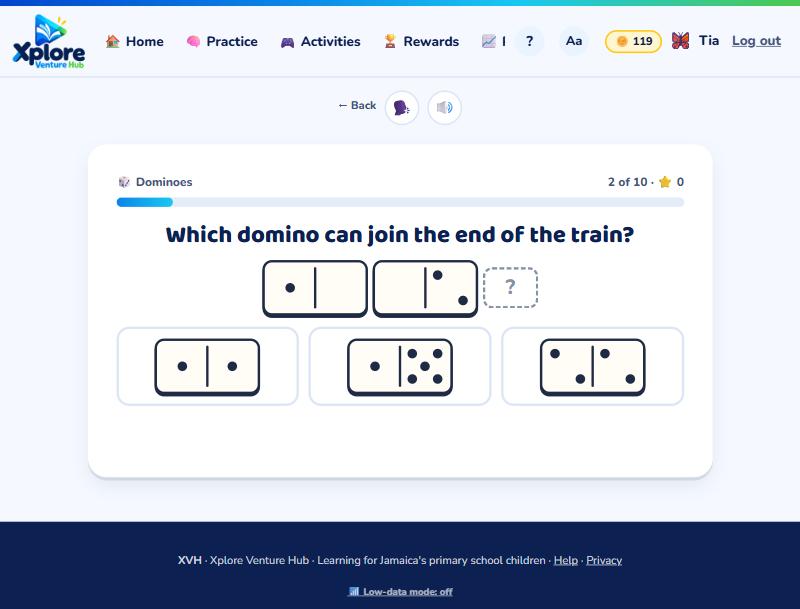
Count the dots, find the domino with a given total, choose the domino that joins the train, find the difference, multiply the two sides and, from Grade 4, stand dominoes up as fractions to compare them. A point for each question right first time.
🎲 Ludi race (Grades 1 to 5)
Pupils roll two dice and work out the sum (adding, taking away, or times tables). A right answer moves their counter on by the total of the dice; a wrong one means they stay put. They race Anansi to the finish, and landing on each other sends you back 3 squares. The score is the number of sums they got right.
🕷️ Coding puzzles (Grades 1 to 6)
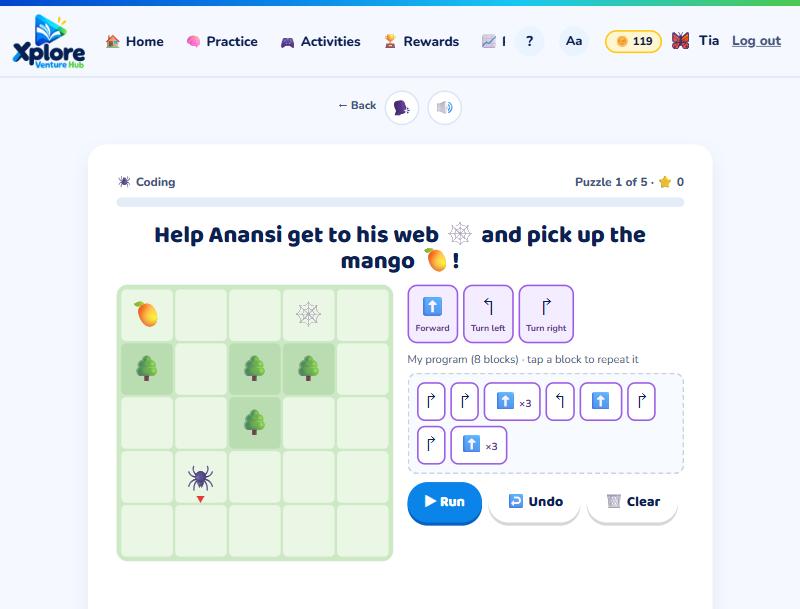
Pupils build a program from blocks to guide Anansi to his web 🕸️, picking up every mango 🥭 and avoiding the trees.
- Grades 1 and 2: arrow blocks (up, down, left, right).
- Grades 3 and 4: arrows and loops: tap a block in the program to repeat it, so ➡️×3 means "go right three times".
- Grades 5 and 6: forward, turn left and turn right, like a robot, with loops.
Pressing ▶ Run shows Anansi following the program step by step, so pupils can see where it goes wrong, fix it and run it again (this is called debugging). They score a point for each puzzle solved within three runs, and get a 🌟 when their program is as short as it can be.